Agency Onboarding
Part of Managing an agency relationship
Choosing a practical agency communication cadence
Set agency check-ins, written updates, response routes and escalation around the decisions your work actually needs.
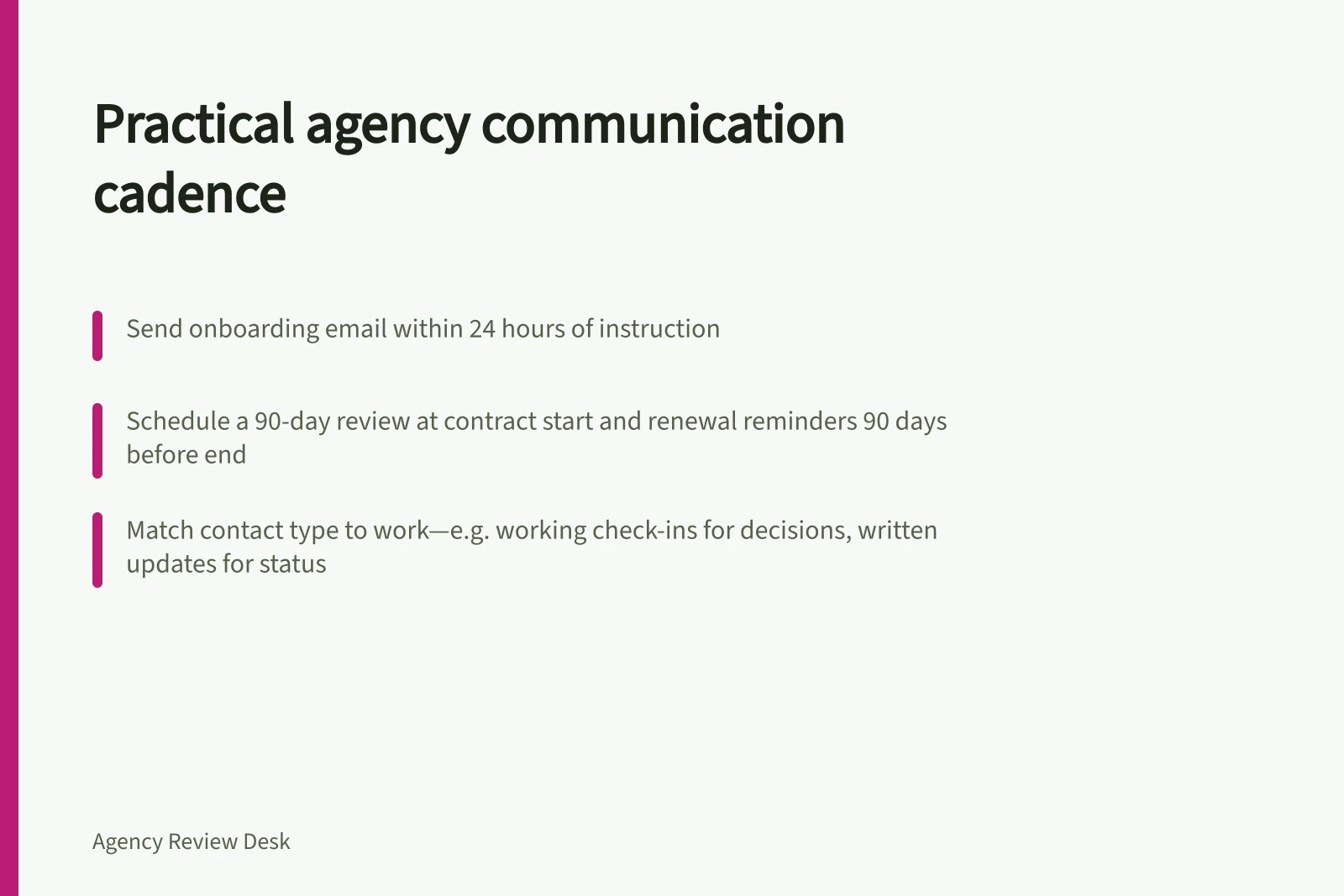
Choose a rhythm around deliverables, dependencies and decisions, then match each contact to a channel. Send an onboarding email within 24 hours of instruction and schedule a 90-day review at the outset; set a reminder for renewal conversations at least 90 days before contract end. Use those as milestone contacts and set interim check-ins around decisions due.
Match contact to upcoming work
Look at the next deliverables and dependencies. Ask when the agency will need a client answer and when the client will need enough information to decide.
A launch with several approvals may call for frequent short conversations. Steady production work may need fewer meetings and written updates at milestones. Set the interim rhythm against upcoming work rather than assuming one interval suits every engagement.
| Contact | Use it for | Useful output |
|---|---|---|
| Working check-in | Blockers and decisions due soon | Actions with owners and dates |
| Written update | Progress that needs no discussion | Current status and questions requiring a reply |
| Priority review | Direction, resources or recurring problems | A decision or an open question with an owner |
Let specialists speak directly when their knowledge is needed. The account manager can coordinate the answer without being the only person who explains the work.
Use email for written updates that need a reply, and a phone call when a blocker or decision needs discussion. Where both teams use Slack Connect for short operational messages, record the resulting decision and client information in a single CRM system.
Choosing the Right Communication Channel
- Working check-in
- Blockers and decisions due soon
- Written update
- Progress that needs no discussion
- Priority review
- Direction, resources or recurring problems
Agree response routes
Record the usual channel for questions, an agreed response window and the escalation contact. Phone the named contact about an urgent production problem; distinguish it from an issue that can wait for the next check-in. Account for leave and time-zone differences where relevant.
Name a Senior Client Manager as an escalation contact. A complaint or client silence for more than two weeks triggers that person stepping in the same day; this is an escalation trigger, not a general response-time promise.
If a client answer needs several internal approvals, tell the agency when it can expect one consolidated response. If the agency must investigate, an acknowledgement can identify who is handling the issue and when a fuller answer is expected.
Change the rhythm when it stops helping
After a few cycles, check where decisions were delayed. If a meeting only repeats a status update, send the update in writing and use the call for choices. If approvals arrive too late, arrange an earlier preview. If urgent questions disappear in chat, give them a named route and record the outcome.
Use the 90-day review as a checkpoint for whether the arrangement is working. A launch, temporary absence or delivery problem may justify more contact for a period; record the temporary arrangement and when both teams will review it.
Pros and Cons of Frequent vs. Infrequent Check-ins
- Frequent check-ins (e.g., weekly)
- Better for complex launches with multiple approvals; reduces risk of delays
- Infrequent check-ins (e.g., monthly)
- Suitable for steady production work; reduces meeting fatigue