Agency Onboarding
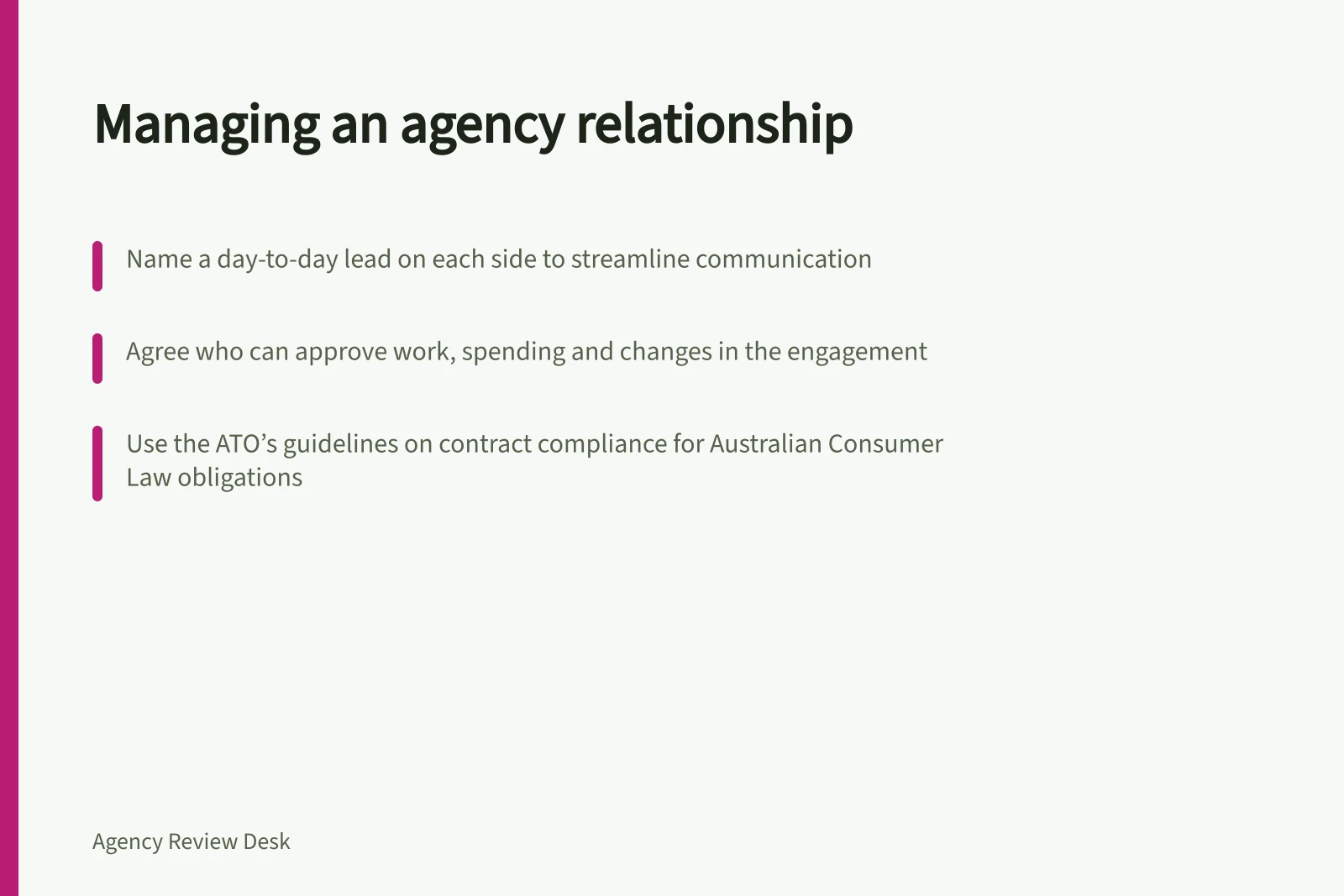
Managing an agency relationship
Set clear contacts, feedback, decisions and escalation paths so client and agency teams can work through changes and delivery issues.
Run an agency relationship by making contacts, decisions and commitments clear. Name a day-to-day lead on each side, allow direct conversations with specialists when useful, and agree who can approve work, spending and changes. Give both teams a way to raise problems early.
Set a working rhythm
Use the work plan to decide what needs discussion. A short check-in can clear blockers and upcoming approvals. A separate review can address priorities and recurring delivery issues. Increase contact during a launch or difficult period, then reduce it when the work settles.
Agree where routine questions go, how urgent issues are escalated and who covers an absent contact. If meetings produce no decisions, shorten them or send routine updates in writing. If decisions arrive too late, move the discussion closer to the point when an answer is needed.
Recommended Working Rhythm During Project Phases
- Pre-Launch Phase
- Increase contact frequency; focus on planning, approvals and risk assessment
- Launch Period
- Daily check-ins may be needed; escalate urgent issues immediately
- Stable Delivery Phase
- Reduce meeting frequency; use written updates for routine matters
- Post-Implementation Review
- Hold a final review to assess performance and lessons learned
Give one usable response
Collect comments from the people who need a say, resolve contradictions and send the agency one response for each version under review. Separate required corrections from preferences and questions. Tell the agency when the review is complete and who can answer follow-up questions.
Comments on a draft do not necessarily authorise publication, spending or additional work. Use the approval route agreed for the engagement.
Keep decisions and changes clear
After a material discussion, record what was decided, the affected deliverable or version, the owner and the next action. Mark unanswered questions as open. Keep the current work plan and decision record accessible to the people doing the work.
If a request may change deliverables, cost, timing or responsibilities, ask the agency to assess its effects before treating it as agreed work. Follow the change process in the particular agreement.
Address problems while they are specific
Describe the missed item, the expected date or standard, its effect and the remedy needed. Ask what caused the gap, agree a recovery action and record when it will be checked. If problems recur, examine client inputs, agency capacity and the plan together.
When a key contact changes, confirm the replacement and hand over current commitments, open decisions and upcoming approvals. Recheck the next deliverables against the existing plan.
A useful periodic question for both teams is: Which decision or dependency keeps slowing the work? Agree a change to the working routine and check whether it helps.
Where Australian Consumer Law consumer guarantees apply to agency services, they must be carried out with due care and skill, be fit for the stated purpose and be supplied in a reasonable time if no timeframe was agreed. Apply these criteria when discussing a specific delivery concern.
Compliance and Legal Considerations in Agency Work
- Australian Consumer Law (ACL) – Consumer GuaranteesServices must be provided with due care and skill, fit for purpose, and delivered in a reasonable time if no timeframe was agreed
- Superannuation Guarantee (SG) ComplianceEmployers must meet SG obligations; audits show non-compliance remains a risk
- Payroll Compliance RequirementsBusinesses must comply with tax and super obligations under ATO guidelines
- Contract Management Best PracticeUse structured processes for approvals, variations and dispute resolution
In this guide
- Choosing a practical agency communication cadenceSet agency check-ins, written updates, response routes and escalation around the decisions your work actually needs.
- Giving consolidated feedback to an agency teamCombine internal comments into one actionable agency response, resolve conflicting instructions and keep final approval clear.
- Handling a change of account managerUse a focused handover to protect live deliverables, approvals, decisions and contacts when an agency account manager changes.
- Recording decisions so scope does not driftUse a concise decision record to distinguish proposals, approvals and scope changes during an agency engagement.