Agency Onboarding
Part of Agency onboarding
Agreeing on a realistic first-month work plan
The first month should establish access, a trustworthy baseline and a small set of improvements. Promising a full strategy, new creative, repaired measurement and …
The first month should establish a trustworthy baseline and deliver a small set of improvements. Promising a full strategy, new creative, repaired measurement and proven sales impact in a few weeks usually hides dependencies.
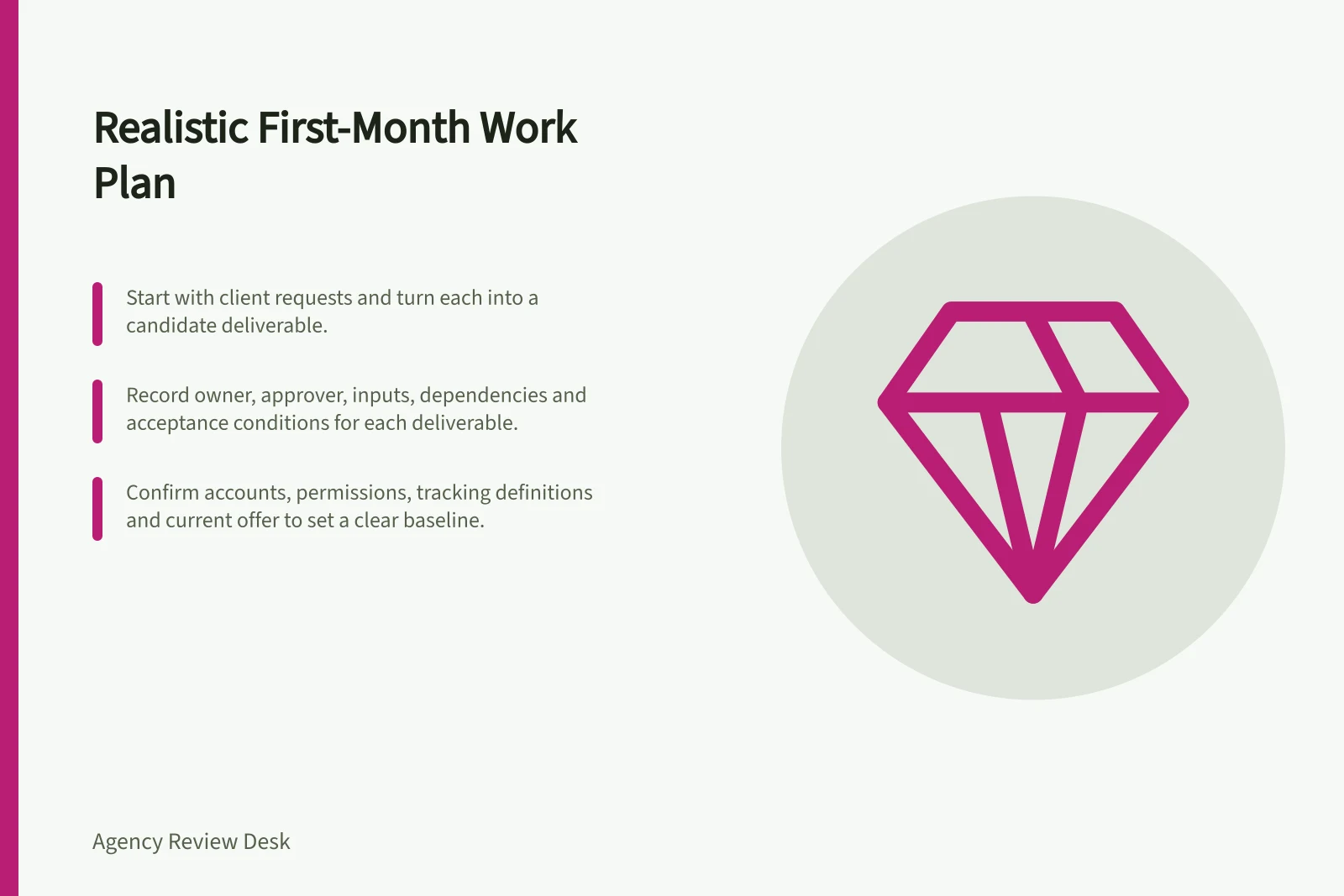
Start with the client’s requested work and turn each request into a candidate deliverable. For each, record the agency owner, client approver, required input, dependency and acceptance condition.
Keep the plan in a written record with fields for deliverable, priority, sequence, owner, approver, inputs, dependencies, acceptance condition and status. Add the decision for each item: agreed, deferred or conditional on an input or approval.
Confirm the accounts and permissions needed, the tracking definitions and the current offer. Record the baseline and the definitions used so the starting point can be inspected.
A draft sequence could be to record the baseline, review existing campaigns or the customer path, and document a search-term review with recommended actions and margin caveats. Add only changes that can be approved, implemented and observed in the available time; this sequence is a proposal to test against capacity, not an automatic commitment.
Separate work the agency controls from work that depends on the client’s stock, website or legal review. Rank issues by likely impact and effort, then check whether the required inputs and approvals can arrive in time for the work to be completed and observed.
For example, if a requested change depends on a website input or legal review that is not ready, keep the search-term review in the proposed plan and defer the change. If the client prefers the change, agree which lower-priority item it replaces, or make the change conditional on the required input or approval.
Make acceptance conditions inspectable. A baseline note can name the tracking definitions checked and campaign or customer-path material reviewed; an issue log can show likely impact, effort, dependency and the decision to proceed or defer.
Review the sequence and conditions with the client before work starts. Ask the client approver to confirm the agreed plan in writing, including any conditional items and the inputs or approvals they depend on.
Treat later additions as swaps, not automatic extra commitments. Record what is being replaced, deferred or made conditional, and update the plan’s decision and status fields.
At month-end, compare completed work with the agreed plan and explain what blocked unfinished items. Report what has been checked and what evidence is still accruing rather than describing an unobserved result as proven, then use that information to set the next month’s priorities.
Agency-Controlled vs Client-Dependent Work
- Agency-Controlled WorkCan be initiated and completed by the agency team (e.g., audit of existing Google Ads campaigns, search-term review).
- Client-Dependent WorkRequires client input such as website updates, legal review, or stock availability (e.g., new ad creative, landing page changes).
Key First Month Outcomes
- Baseline Established
- Confirmed tracking definitions and initial performance data
- Client Approvals Secured
- Written confirmation on plan, including conditional items
- Dependencies Identified
- Clear list of client inputs or approvals needed