Agency Onboarding
Part of Agency onboarding
Running a kickoff around outcomes and responsibilities
A kickoff is useful when it resolves choices that would otherwise stall delivery. Send factual background before the meeting and use the live time to agree on …
A kickoff works when it settles choices that would otherwise stall delivery. Send factual background before the meeting, then use the live session to agree the business outcome, who may decide and what happens next.
Invite the client sponsor, day-to-day client lead, consulting engagement lead, workstream owners and a note owner. Ask each person what they own, what they can approve and what input they need; record their decision authority rather than inferring it from their job title.
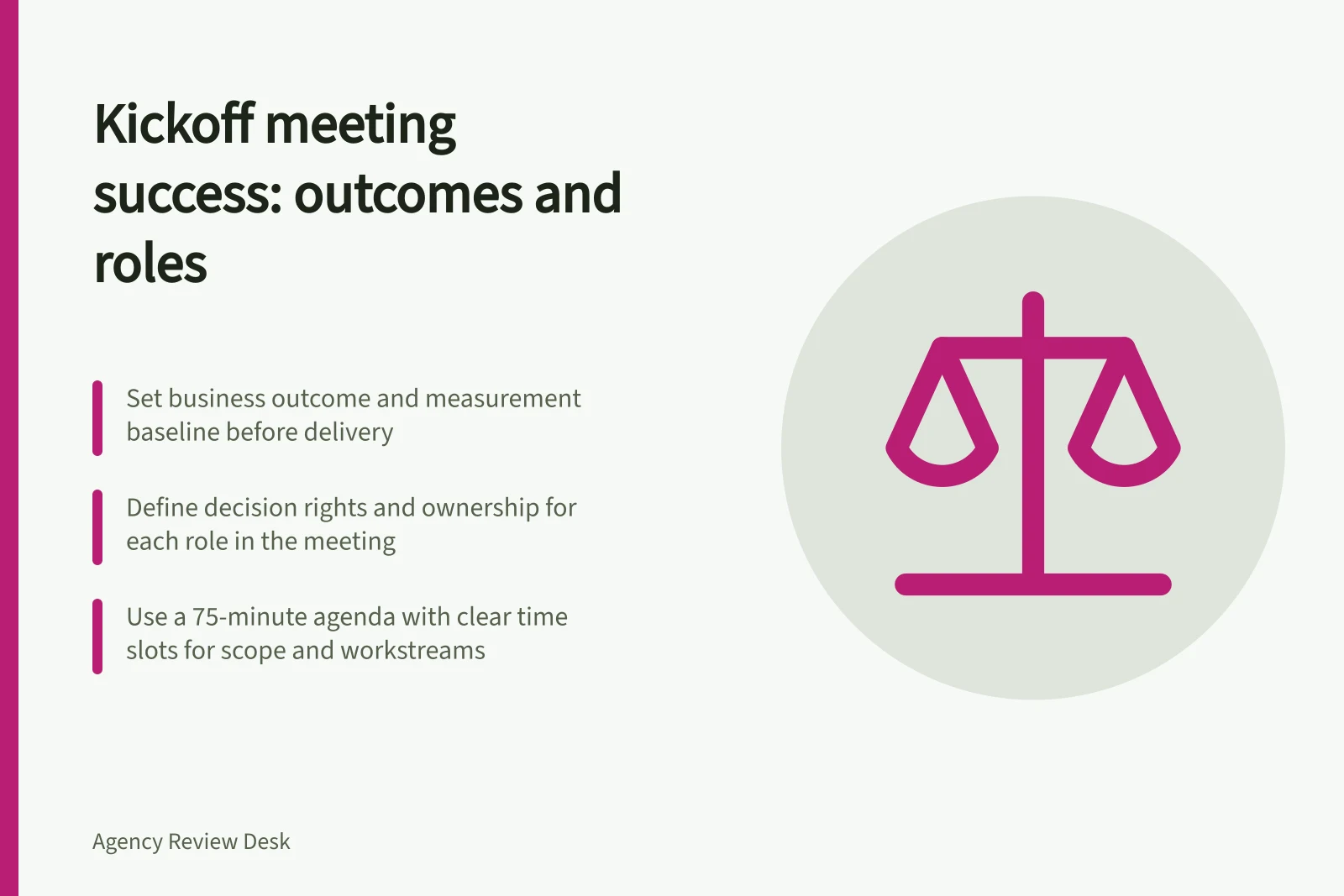
Use a 75-minute agenda: meeting outcome and working agreements, 5 minutes; roles, sponsorship and decision rights, 8 minutes; desired outcomes and current evidence, 12 minutes; scope, exclusions and assumptions, 12 minutes. Then move to workstreams and the decisions, owners and open questions that need resolution.
Open with the business outcome and how it will be judged. Agree the measurement baseline and identify uncertainties that could affect a short-term result, such as attribution gaps, seasonal demand or a newly launched product; name who sets the baseline and how it will be measured.
Ask the agency to restate its proposed route to the outcome and what it needs from the client. Use that discussion to assign decision rights for claims, creative, spend and technical changes: agree who proposes, who gives input, who approves and who can pause work if a customer promise is wrong.
Agree a response window and an escalation contact and route; silence is not implied approval. If a decision cannot be resolved in the meeting, record the open question and its owner.
Have the note owner maintain a shared decision record. Capture the outcome and measure, baseline and uncertainties, decision authority for each change type, response window, escalation route, and unresolved questions with their owners.
Close by naming first-month deliverables, owners, dependencies and review dates. Each participant should be able to explain what happens next and who may decide when the plan changes.
Decision Authority for Key Project Elements
- Claim Approval
- Client sponsor (with input from agency lead)
- Creative Direction
- Agency creative lead (client approval required for final sign-off)
- Technical Changes
- Agency workstream owner (with client tech lead review)
Key Kickoff Deliverables and Accountability
- Baseline Measurement Owner
- Client data lead
- Escalation Contact
- Client sponsor or agency engagement lead
- First-Month Deliverables Review Date
- End of month 1