Agency Onboarding
Part of Managing an agency relationship
Recording decisions so scope does not drift
Use a concise decision record to distinguish proposals, approvals and scope changes during an agency engagement.
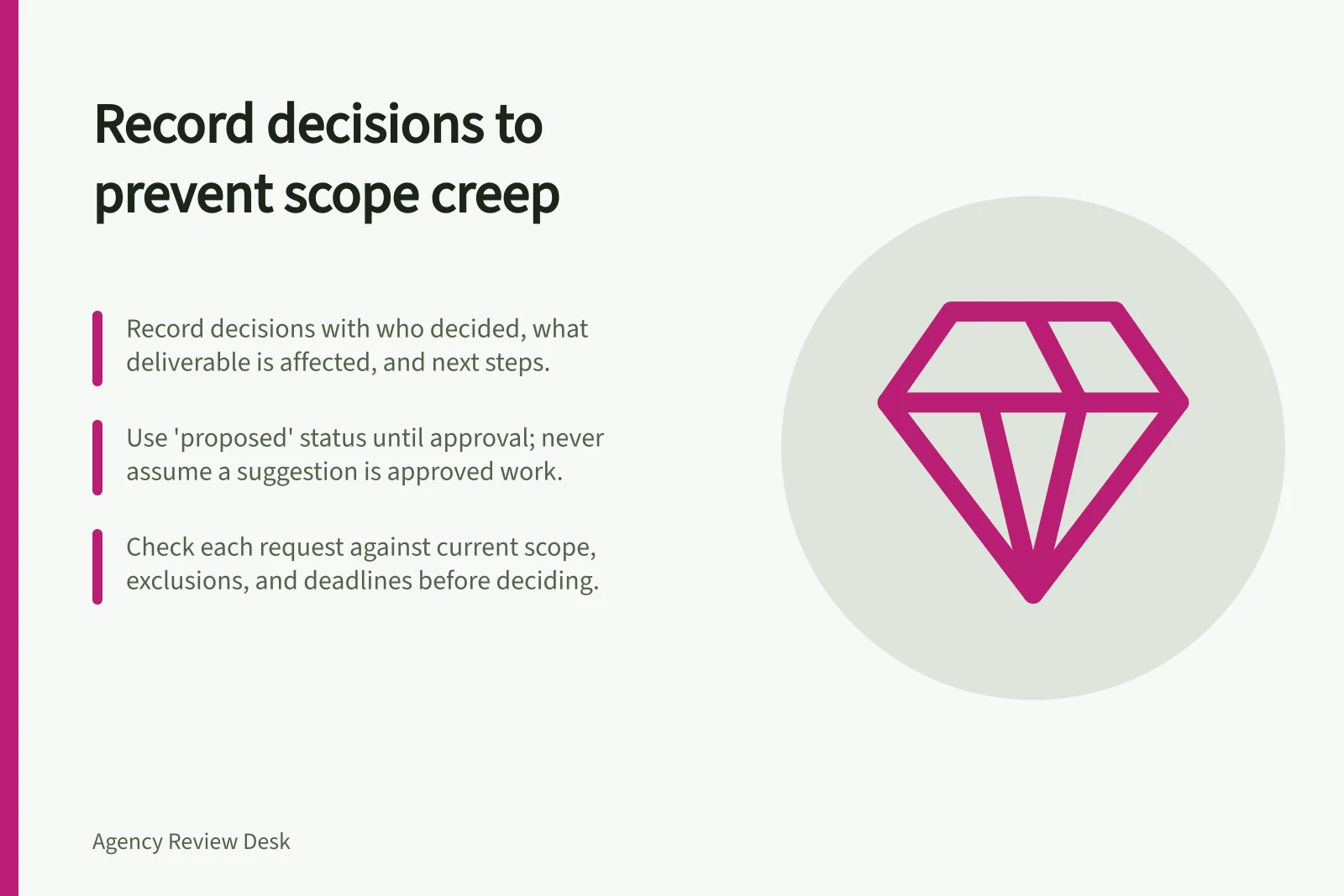
Record a material decision when it is made and connect it to the current work plan. The record should show what was decided, who decided it, which deliverable it affects and what may happen next. Keep a proposal visibly open until it receives the approval required for that engagement.
Use one current record
A shared register can be brief. For each item, record the date, question, status, decision maker, affected deliverable or version, next action and owner, and point to the relevant brief, work plan or approved change document.
Field / Example entry
- Question
- Add a second landing-page variant?
- Status
- Proposed; awaiting an estimate
- Effect to assess
- Design, copy, review time and launch date
- Decision owner
- Client role authorised for this choice
- Next action
- Agency to provide options before work starts
Capture a suggestion without presenting it as approved work.
Check the agreed work before deciding
Compare each request with the current deliverables, exclusions, review rounds and dates. Some requests clarify an existing requirement.
A new output, direction or deadline may affect cost, capacity or other commitments. Ask the agency to explain those effects before the client decides.
Use statuses that distinguish a proposal from a decision: proposed, approved within existing scope, approved through the required change process, deferred or declined. When work is approved, update the plan and link it to the authorising record.
If the request changes the contract, follow its variation and approval terms. A register entry does not, by itself, establish that the contract has been amended.
Capture and revisit decisions
After a call, send a short note to those who need to act. State the decision, next action and open questions, and invite prompt correction of any misunderstanding.
For a consequential change, obtain the approval the engagement requires before directing the work to proceed.
Review open items at the next working check-in. Give each unresolved item an owner and a date for the next decision.
If several small requests accumulate, assess their combined effect on the plan and decide whether a revised work plan or change proposal is needed.
Keep the record short enough to maintain and precise enough for someone joining the work to distinguish an idea from a commitment.