Proposal Comparison
Part of Agency reviews and rating methodology
Separating paid listings from editorial assessments
How to identify sponsored agency placements and keep their presentation separate from evidence-based editorial reviews.
A paid agency listing should state that payment bought visibility. An editorial assessment should set out the evidence behind its judgement. Where both appear together, make the difference clear before a reader treats position or presentation as a recommendation.
State what payment affects
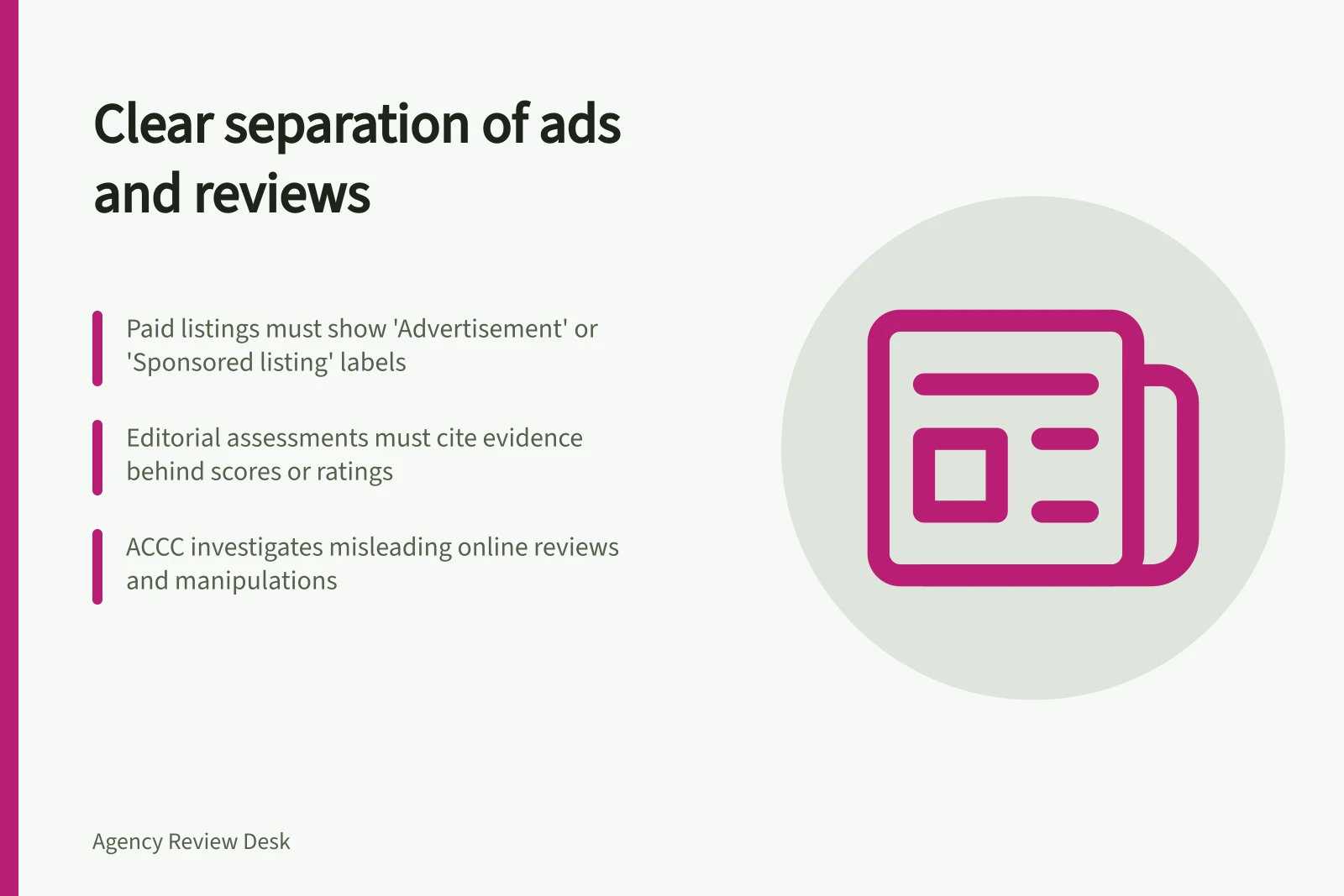
Identify which elements can be bought: inclusion, position, card size, promotional copy or access to a review process. Near the list, explain any effect on its order. Use a label that describes the arrangement, such as “Advertisement” or “Sponsored listing”, rather than an ambiguous “featured” badge. Show the commercial relationship on the individual profile as well as in a list.
An agency may appear in both a paid placement and an editorial review. If an editorial score appears beside a paid placement, readers must be able to tell that payment did not determine the score or buy its display as an endorsement. Where that distinction cannot be made clear, leave the score off the paid placement.
Give each route clear control
Define what the advertiser buys, including format, duration and permitted promotional content. Keep factual checks, assessment criteria, conclusions and corrections under editorial control. Record who may approve a change to each area. Payment for advertising space should not purchase a favourable assessment or removal of a material qualification.
| Reader-facing question | Paid listing | Editorial assessment |
|---|---|---|
| Why does it appear? | A commercial arrangement, clearly labelled | Stated editorial inclusion criteria |
| Where do its claims come from? | Advertiser-supplied claims, checked before use | Sources identified through the review process |
| What does its position mean? | It may reflect the paid arrangement | It follows the disclosed editorial method |
Check the reader's view
Inspect the actual list and standalone profile at the sizes readers use. Is the paid label visible before a reader relies on an apparent rank? Does the heading or card design imply editorial approval that the disclosure cannot correct? Change the presentation if the overall impression remains unclear.
Australian Press Council guidance on advertorials describes newspaper and magazine content that looks editorial but is published under a commercial arrangement. It says such content should be identified with terms such as “advertisement” or “sponsored feature”. The guidance is framed around newspaper and magazine advertorials.
The ACCC accepts reports about fake or misleading online reviews and review manipulation. It uses reports to inform its education, compliance and enforcement work.
Update the disclosure when a payment changes a listing's inclusion, order or presentation.
Regulatory Guidance and Reporting in Australia
- Australian Press Council Advertorial GuidelineRequires clear identification of commercial content using terms like 'advertisement' or 'sponsored feature'
- ACCC Online Reviews EnforcementAccepts reports on fake or manipulated reviews to inform compliance and education efforts
- ACCC Misleading Claims AuthorityInvestigates false or misleading advertising claims under consumer protection laws